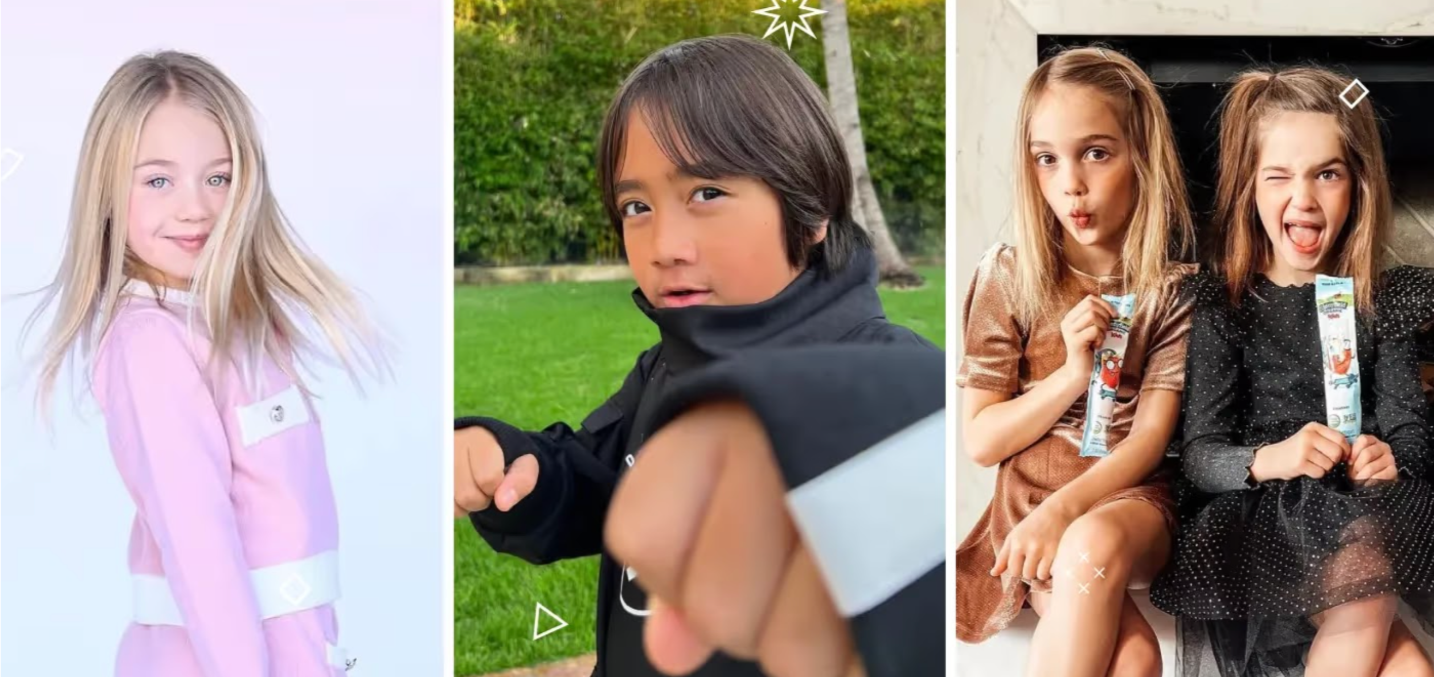
Conducted research to transform qualitative observations into quantifiable insights for policy and regulation debates
Kidfluencers | Research Article
Overview:
As a research assistant for Professor Freeman, I helped contributed to one of the first large-scale studies analyzing how kidfluencer content evolved after YouTube’s 2019 COPPA settlement.
The question: Did the crackdown on data-driven ads really make children’s media safer, or did it just change how brands sell to kids?
My Role in the Research
Data Strategy: Collaborated with Professor Freeman to define which on-screen and verbal cues counted as advertising and how to categorize them.
Quantitative Coding: Created a 27-category system to translate qualitative observations — tone, disclosure language, brand presence — into measurable data.
Manual Analysis: Watched and logged over 40 hours of kidfluencer videos, using scraping techniques to ensure consistent sampling across creators and time periods.
Why It Mattered to Me
Although the broader research team had wide-reaching goals, what excited me most about this project was its potential to equip policymakers and advocacy groups with real evidence to create smarter digital marketing regulations.
The internet still feels like the Wild West. Too often, change only happens after the damage is done. I hope that work like this can help create preventative measures to avoid the exploitation of children’s attention.
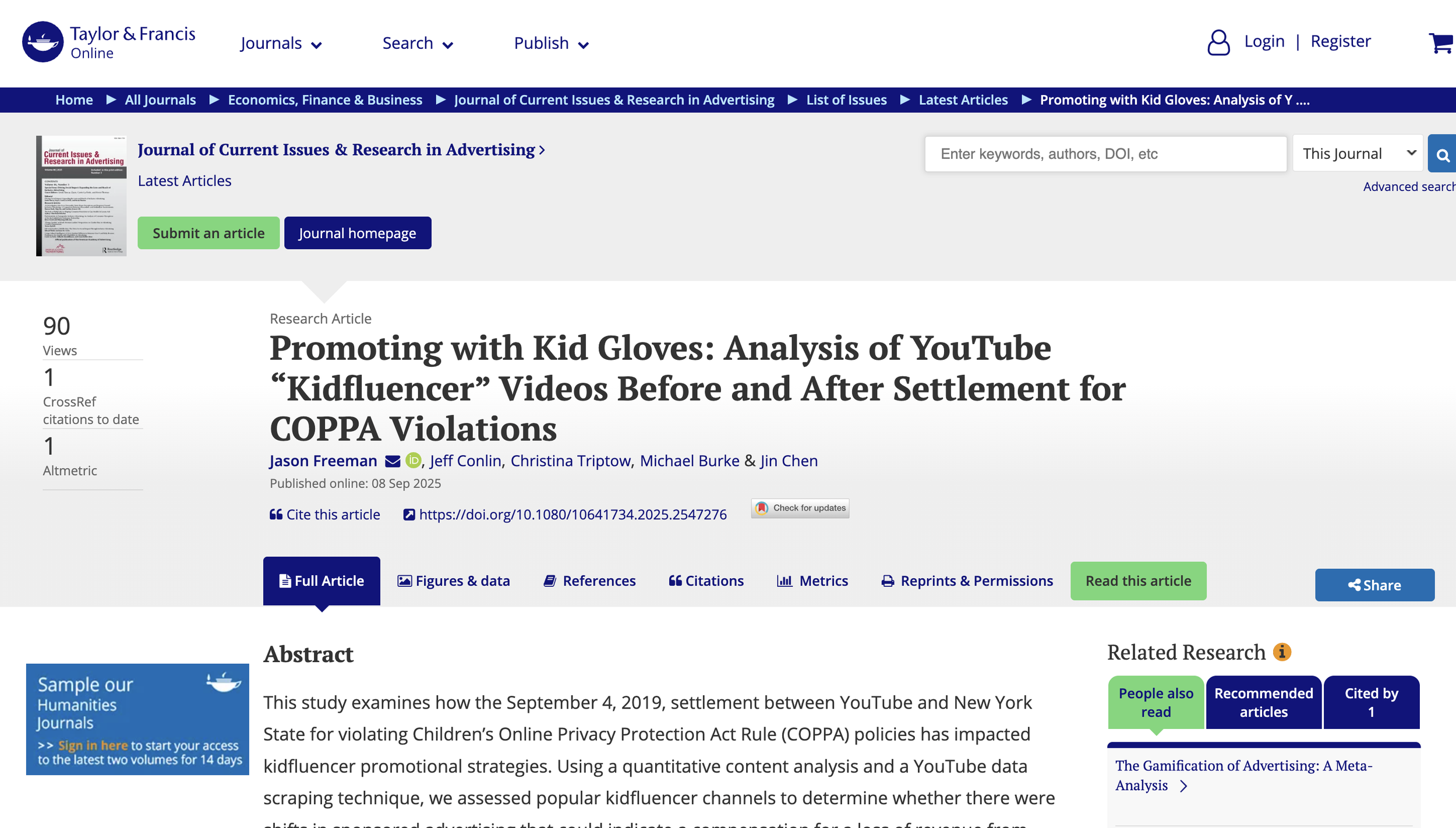
Read the full study:"Promoting with Kid Gloves: Analysis of YouTube Kidfluencer Videos Before and After COPPA Settlement"
Freeman et al., 2025